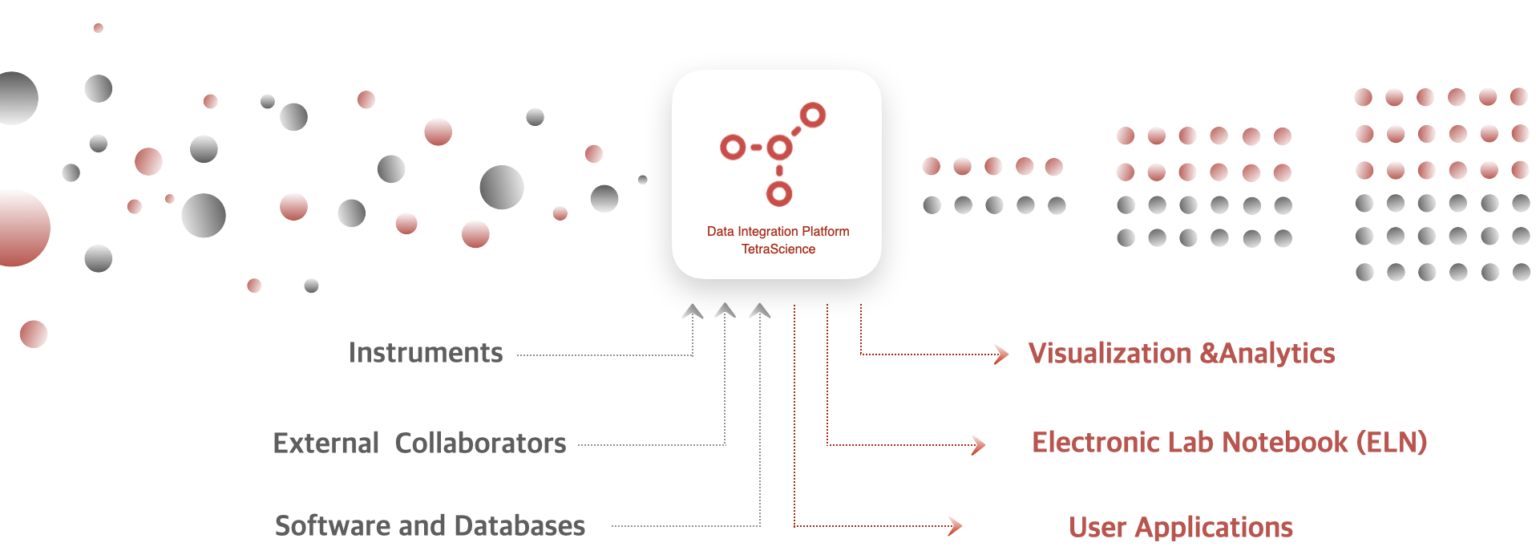
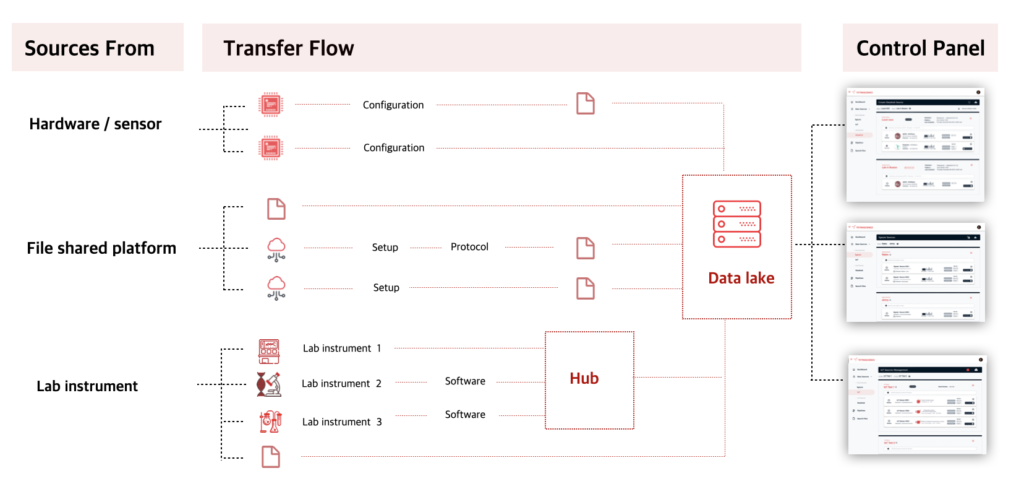
Tetrascience is an IoT platform for R&D. It automate data integration amongst your lab and CROs/CMOs .
Goals for the project were central to improving information architect, user engagement, accessibility, and usability to help the user achieve their data task on data integration platform.
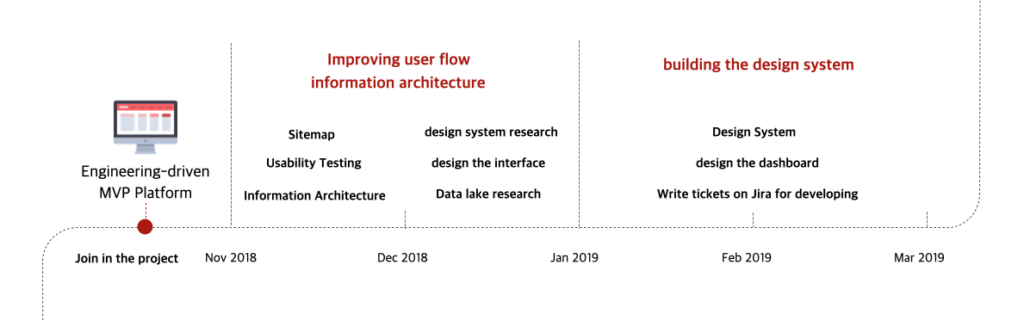
The general project was to develop the design system for Tetrascience data integration platform. Working alongside with engineer team in agile development, under the direction of product manager.
Customers and Users
Customer – Bio Tech ( Drug Developing company)
User groups
– IT application user, who has more permissions to setup the sources and operate the platform, to ensure all the data flow works great.
–For our End user is scientists , they search the data on data lake in order to draw conclusions and gather insights.
What I Learn
I have to say it’s definitely an eye-open intern. The project is special and innovate, which drives me back to the books and rethink the points I never thought before.
I would like to share something that inspired me during the intern. It’s a great experience to find that the learning from the book has echoed the situation in practice.
New User VS Intermediate
TARGET INTERMEDIATE USERS
Should we provide more tips (wizards) to guide for beginners or cater to the needs of the expert?
The setup part for our platform is somewhat complex due to authentication and data integration. For new users, they have to get over the initial learning curve to become intermediate users or even expert users. How to find the right balance between catering to the needs of the first-timer and the needs of the expert?
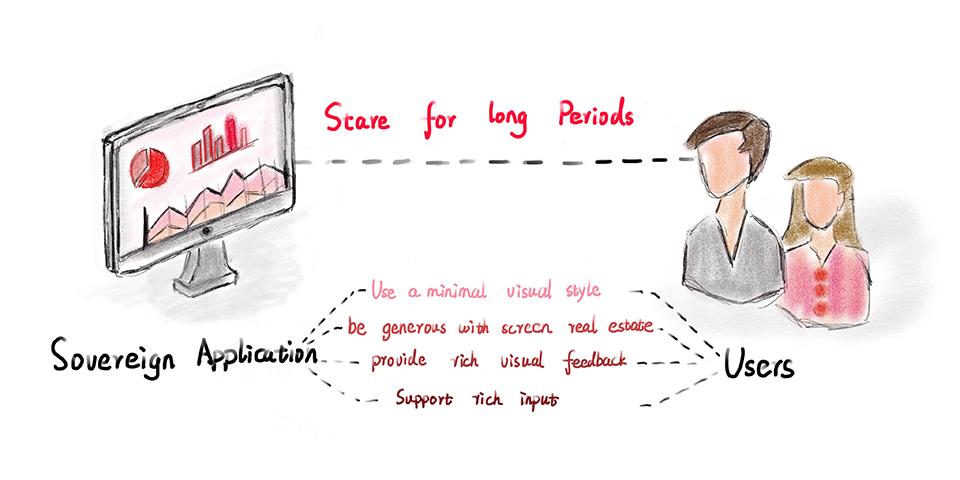
“Applications that monopolize users’ attention for long, continuous periods of time are called sovereign-posture applications. Sovereign application offer a large set of related functions and features, and users tend to keep them up and running continuously, occupying the full screen.“
According to the interaction process between our product and users, our platform should be taken the sovereign posture.
“Design Principle: Optimize for intermediates “
As for sovereign posture, ” Sacrificing speed and power in favor of a clumsier but easier-to-learn idiom is out of place here, as is providing only sophisticated power tools.” (page:209)
— « About Face 4th Edition »
Therefore, we don’t need to cater to beginners or to experts, because nobody wants to remain a beginner. We need to devote more efforts to satisfying perpetual intermediates.
Design System
Design System
All this principle is a ruleset guide every composition of a product.
I feel really appreciate my product manager, Robin, she lent me a book « Design System » during my intern. From this book, i realized that design system is more than a UI toolkit or pattern library. It’s more than the style guide or coding guidelines.
Understanding the actual business value is essential to create a good Design System.
In order to know how to use design system create better products. I explored the different design system from the different company to find a good way forward. We should consider the design system according to product feature in business cohesively.
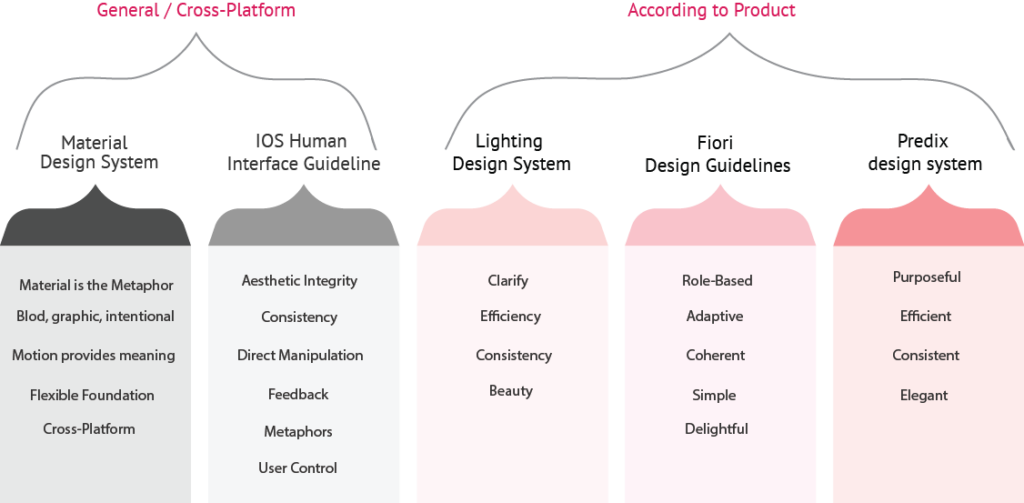
I found the design system such as Google Materials Design, IOS Human Interface Guideline are very general because their design system are cater for the wide range of industry or domain.
The design system such as Salesforce’ lighting design system, Intuit’ Quickbooks design system, GE’s Predix design system ,and SAP Fiori design guidelines. They built the principle, components and patterns, which is closely fit for their product.
I listed a form of design principles in order to help me understand how the design principle can be used to create better products.
For example, we can clearly realize the design principle presents the products’ feature. The most important principle for SAP Fiori and Salesforce are role-based and clarify. This example reminds me to create the right patterns and components of our product.
IoT for UX
Internet of Things
Exploring…..
At first, the product seemed a bit complex to understand since I was all new to the field of IoT at an enterprise level. But, I feel really lucky to join this project and I got familiar with IoT than before. Our project is aiming to create a “smart Lab”, and this is really exciting!
Information Explosion
With the Internet of Things(IoT), the devices can integrate a lot of data from multiple sources. We can imagine it will be a connected world in the future.
However, there is too much information, both useful information and misleading information around us.
It’s a challenge for us to choose the valuable information or data that benefit for the end users.
Therefore, I think the product designer and UX designer will be responsible to create a great product flow, which has the true business value for IoT product.
Smooth the interaction
Compare with traditional digital product, the IoT product has more indispensable steps, such as the application for setup or authenticate to consider with. It’s important for designer to think about how to simplify the step and smooth the interaction, how to use calm technology to create the delightful and secure product.
Reference
Cooper, A., Reimann, R., & Cronin, D., & Noessel,C(2014). About face 4: the essentials of interaction design. John Wiley & Sons.4
Alla kholmatova (2017). Design System. Smashing Media AG
SAP. (2018). Fiori Design Guidelines . Retrieved from https://experience.sap.com/fiori-design/
Salesforce, inc. (2018). The lighting design system . Retrieved from https://www.lightningdesignsystem.com/guidelines/overview/
GE. (2018). GE’s Predix Design System . Retrieved from https://www.predix-ui.com/#/design/foundation/view-design-principles
Google. (2018). Material Design. Retrieved from https://material.io/design/introduction/#principles
Apple. (2018). Human Interface Guidelines. Retrieved from https://developer.apple.com/design/human-interface-guidelines/ios/overview/themes/