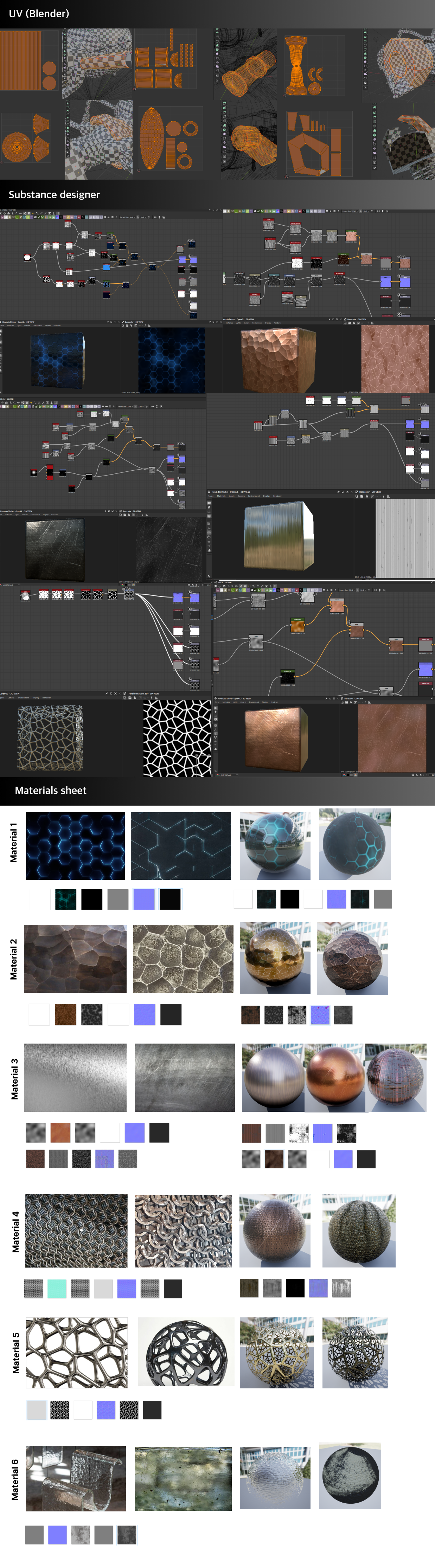
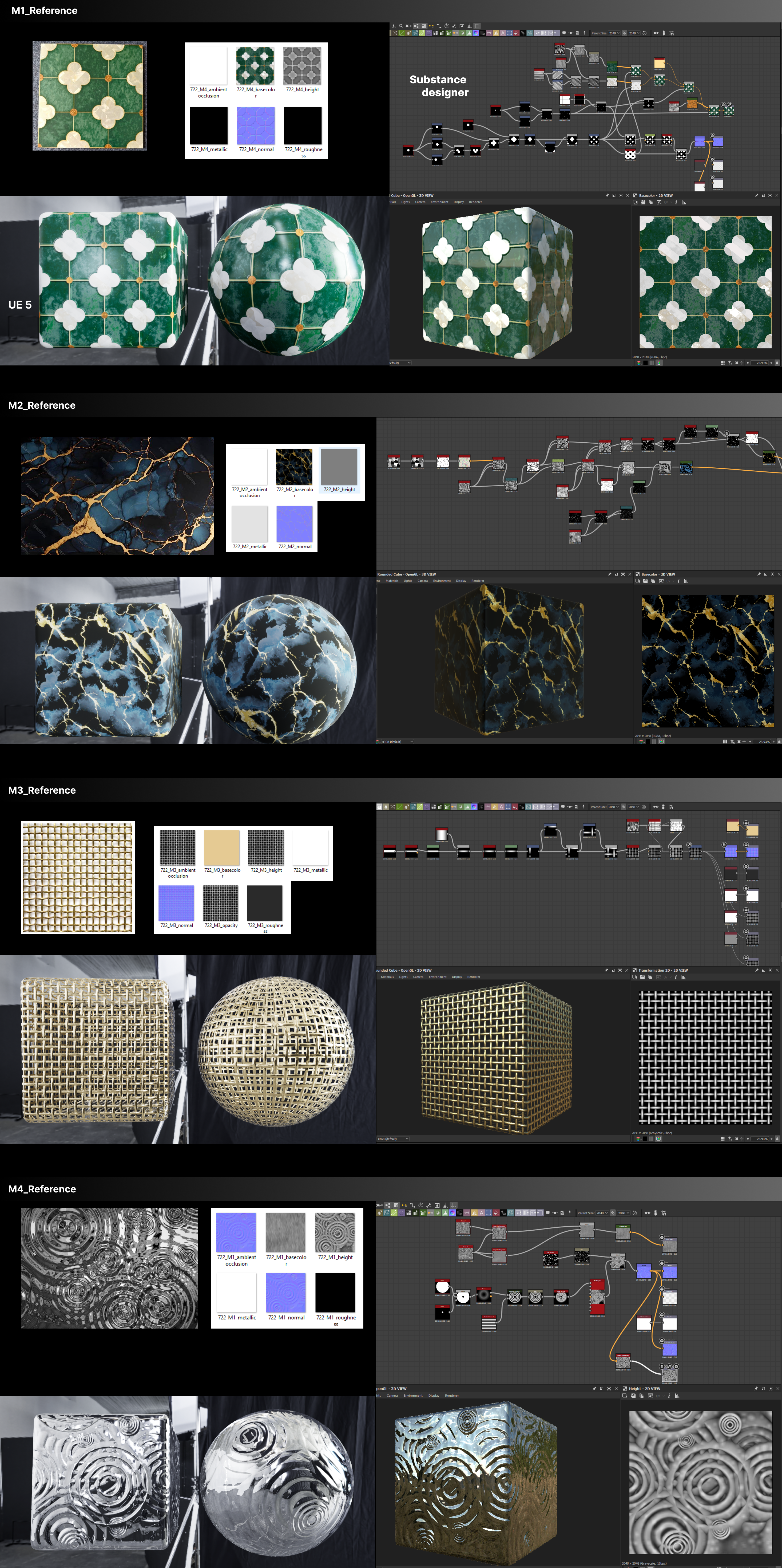
Digital surfaces play a crucial role in defining the art style of video games. Through the real-time materials and shaders course, I gained hands-on experience in applying materials and texturing properties, as well as an in-depth understanding of real-time rendering techniques.
Concentrating on – Create digital materials UV layouts, 3D PAINTING, Bitmap image – Light and material interactions – Cinematic view
Course: Game Tech: Real-time materials and shaders (SCAD)
Time: March - May 2024
Tools
Course outcome - Project 1
Ideation
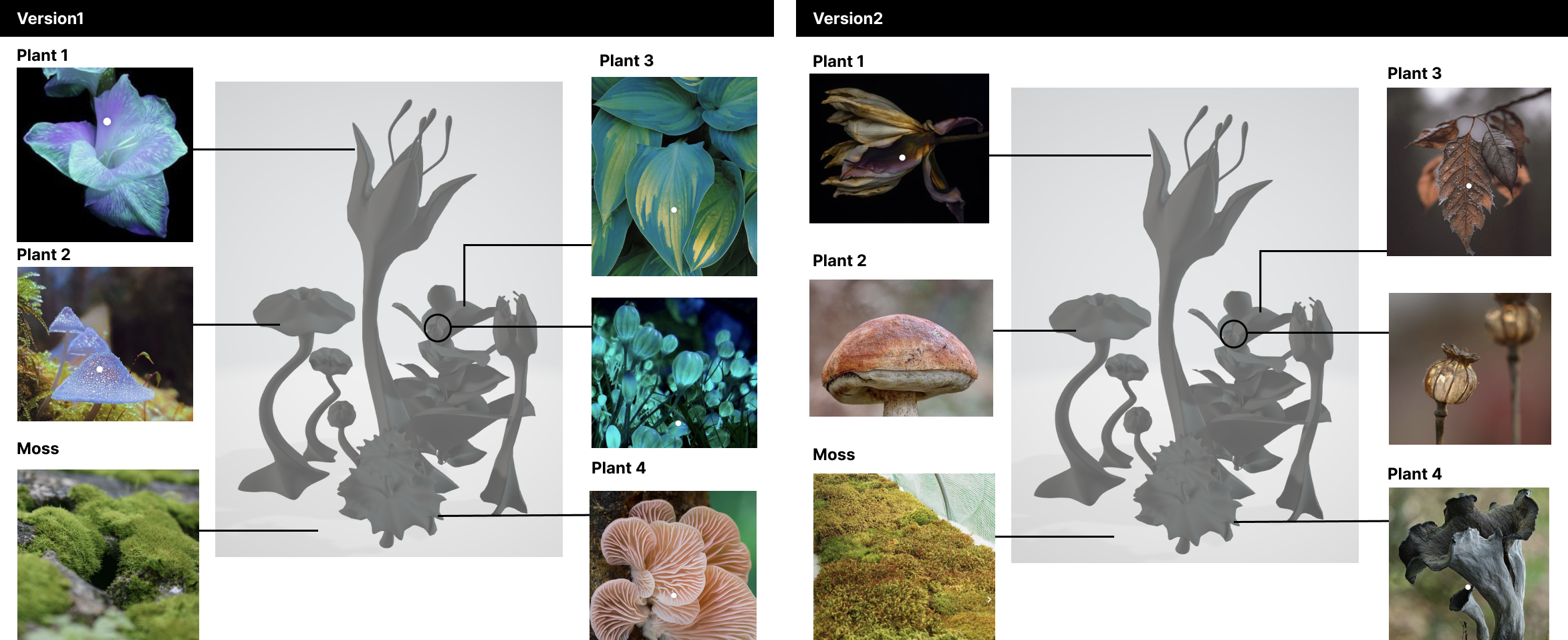
For my organic materials project, I decided to create materials for alien plants. Unlike having a fixed vision, I prefer a more intuitive approach, allowing creative freedom to guide the process. I sourced inspiration from Pinterest, gathering images that helped me visualize the material characteristics.
After analyzing the references, I identified several key characteristics to emphasize:
Gradient Colors: Using linear and radial gradients to create a dynamic and otherworldly appearance on plant
Emissive Colors: Utilizing a cyberpunk aesthetic to give the alien plants a futuristic, glowing look.
Subsurface Scattering and Opacity: Enhancing these properties to add depth and realism to the textures. Subsurface scattering is particularly important for organic materials, as it simulates the way light penetrates translucent surfaces and scatters within them, creating a soft, realistic appearance.
For 3D models, I purchased assets from CGTrader with a royalty-free license. These models were UV-mapped, and I made necessary adjustments using Blender.
3D models: https://www.cgtrader.com/3d-model-collections/alien-vegetation-b53ec4b5-8382-4c70-85b0-1ee8a7236031
Design process
For example, Substance Designer was used primarily for creating materials with clear, repetitive patterns. For more complex materials like plants, which require detailed and varied textures, Substance Painter provided greater control and flexibility.
Substance Designer
- Pattern Creation: For materials like moss, which feature repetitive patterns, Substance Designer's node-based system is ideal. I can create complex patterns by combining various noise and procedural nodes, ensuring a seamless texture.
- Material Blending: The ability to blend different materials using masks and blend nodes provides a high degree of control over the final look. This is particularly useful for creating linear and radial gradients pattern on my materials.
Substance Painter
- Detailed Texturing: Substance Painter excels in adding intricate details to specific areas of a model. For example, Using its powerful brush engine, I added more vertical lines with raised height along the stems to create a more robust and unique appearance.
- Layer System and Masks: The layer-based approach in Substance Painter allows for complex material stacking and blending. For example, the mushrooms, I increased the edge height and intensified the normal map lines to providing a rich and detailed texture. I added dewdrops on the mushroom tops using dot noise, enhancing the organic feel. I applied a dust layer to the plant edges and used the cracks brush in Substance Painter to draw venation.
Subsurface Scattering
Adjusted the subsurface scattering parameters to make the plants appear more fleshy and glossy. Specifically, I used the "Subsurface Scattering" shader model in Substance Designer, tweaking the SSS radius and color to mimic the way light diffuses through the plant material.
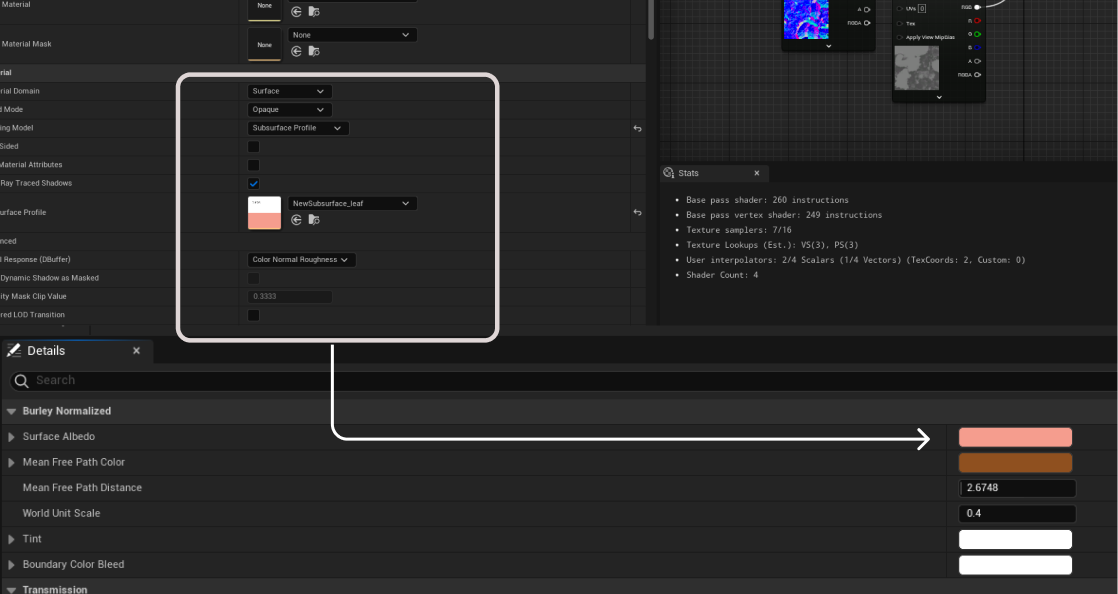
Subsurface Profile in UE5
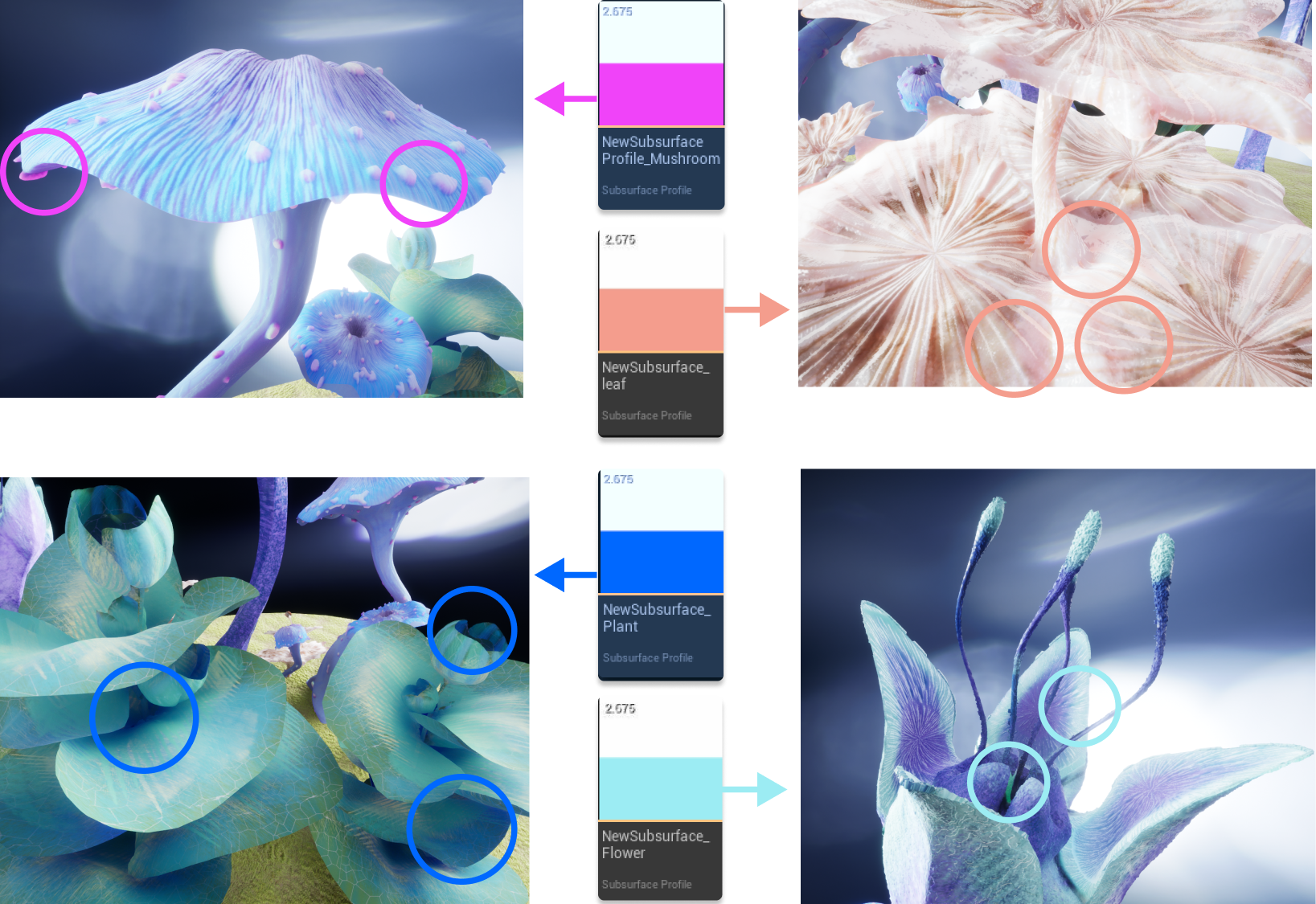
To further enhance the realism of my materials in Unreal Engine 5, I utilized subsurface profiles. Subsurface profiles are essential for achieving accurate subsurface scattering effects in real-time rendering. I chose colors that matched the look of the alien plants, which was ideal for the fleshy look of the plants.